Radioiodine-Refractory Differentiated Thyroid Cancer
- Definition. RAI-refractoriness is decided on a post-therapy scan and by behaviour over time, never by a negative diagnostic scan alone.
- Stop. Once disease is RAI-refractory, further empiric radioiodine adds radiation without benefit.
- Pace. Many patients live for years on surveillance. Structural progression and symptoms, not a rising Tg alone, trigger treatment.
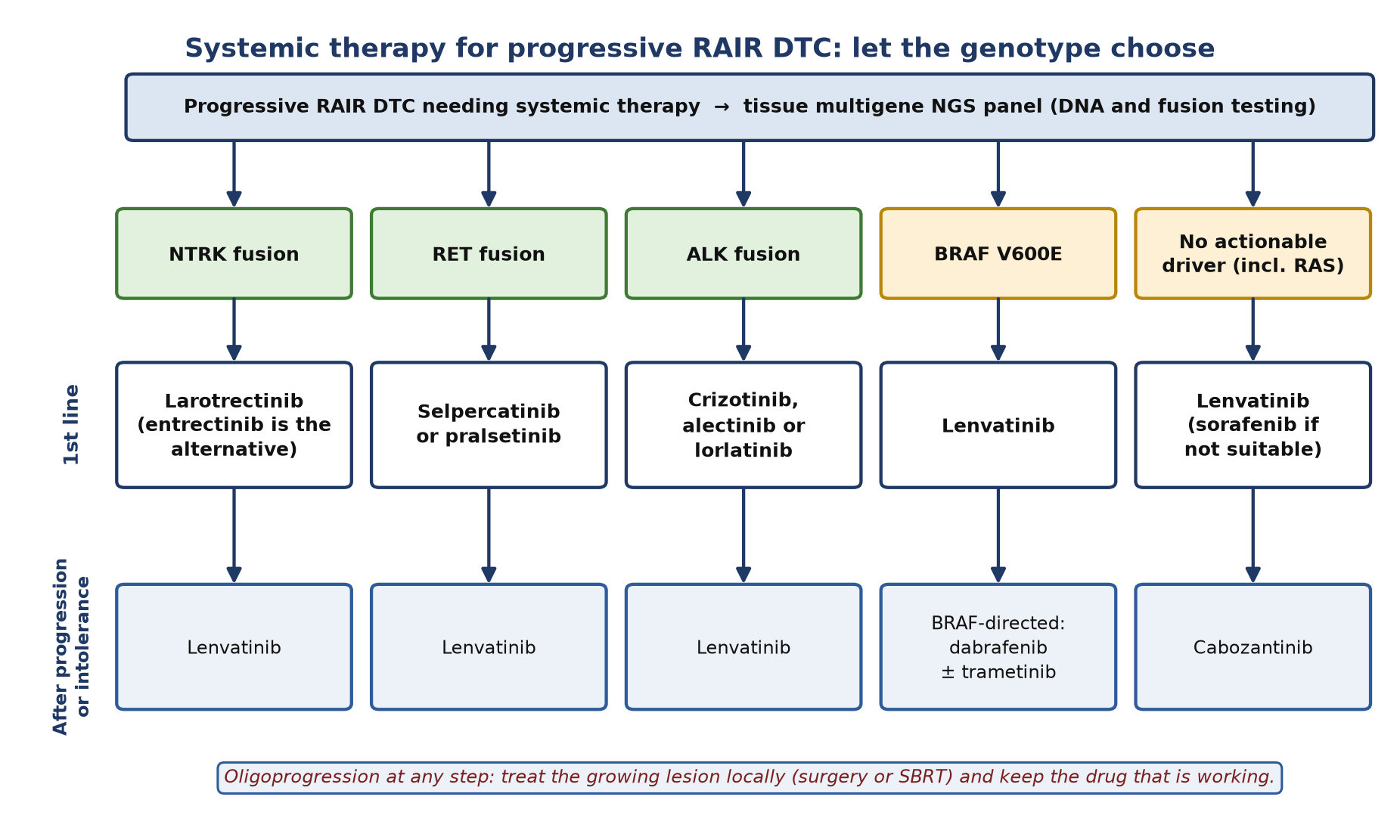
- Test first. Before any systemic drug, send tumour tissue for a multigene NGS panel.
- No driver. Lenvatinib first line, cabozantinib second line.
- Driver found. NTRK, RET or ALK fusion: selective inhibitor first. BRAF V600E: lenvatinib first, BRAF-directed therapy next.
- Few lesions. Oligometastatic or oligoprogressive disease is often best treated locally.
1. What makes DTC “radioiodine-refractory”?
Radioiodine works only while tumour cells still carry the sodium-iodide symporter (NIS). When they lose it, ¹³¹I stops reaching the tumour. The 2025 ATA guideline separates true refractoriness from disease that is merely less avid.
RAI-refractory (RAIR)
- No ¹³¹I uptake on a post-therapy whole-body scan in disease confirmed on structural imaging or ¹⁸F-FDG PET/CT.
- Or disease progression less than 6 months after an appropriate therapeutic RAI activity.
Reduced RAI sensitivity (not yet RAIR)
- No uptake on a diagnostic ¹²³I or ¹³¹I scan despite detectable disease. The post-therapy scan may still be positive.
- Uptake in some, but not all, lesions on the post-therapy scan.
The grey zone
- Uptake in all known lesions, but disease persists (stable, not cured) after several therapeutic activities.
- Whether to call this RAIR is debated; there are no randomised data. The chance of cure with more RAI is low.
- Before another activity, weigh: the intensity of uptake on the last post-therapy scan, FDG avidity, and whether preparation was adequate (low-iodine diet, TSH stimulation, no recent iodinated contrast).
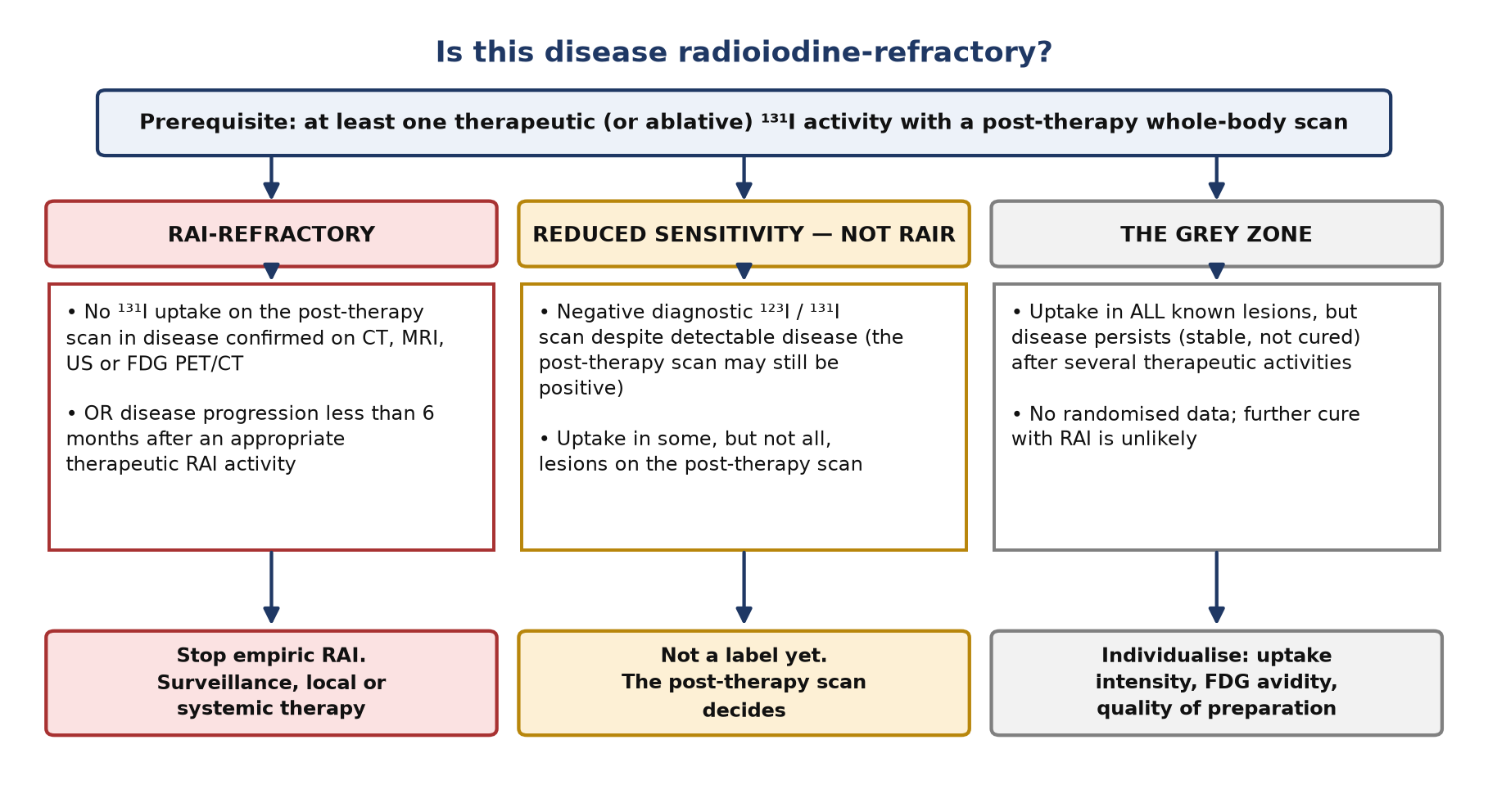
- RAIR cannot be diagnosed in a patient who has never received an ablative or therapeutic activity.
- Patients with RAIR DTC should not receive further empiric RAI therapy.
2. Why tumours stop taking up iodine
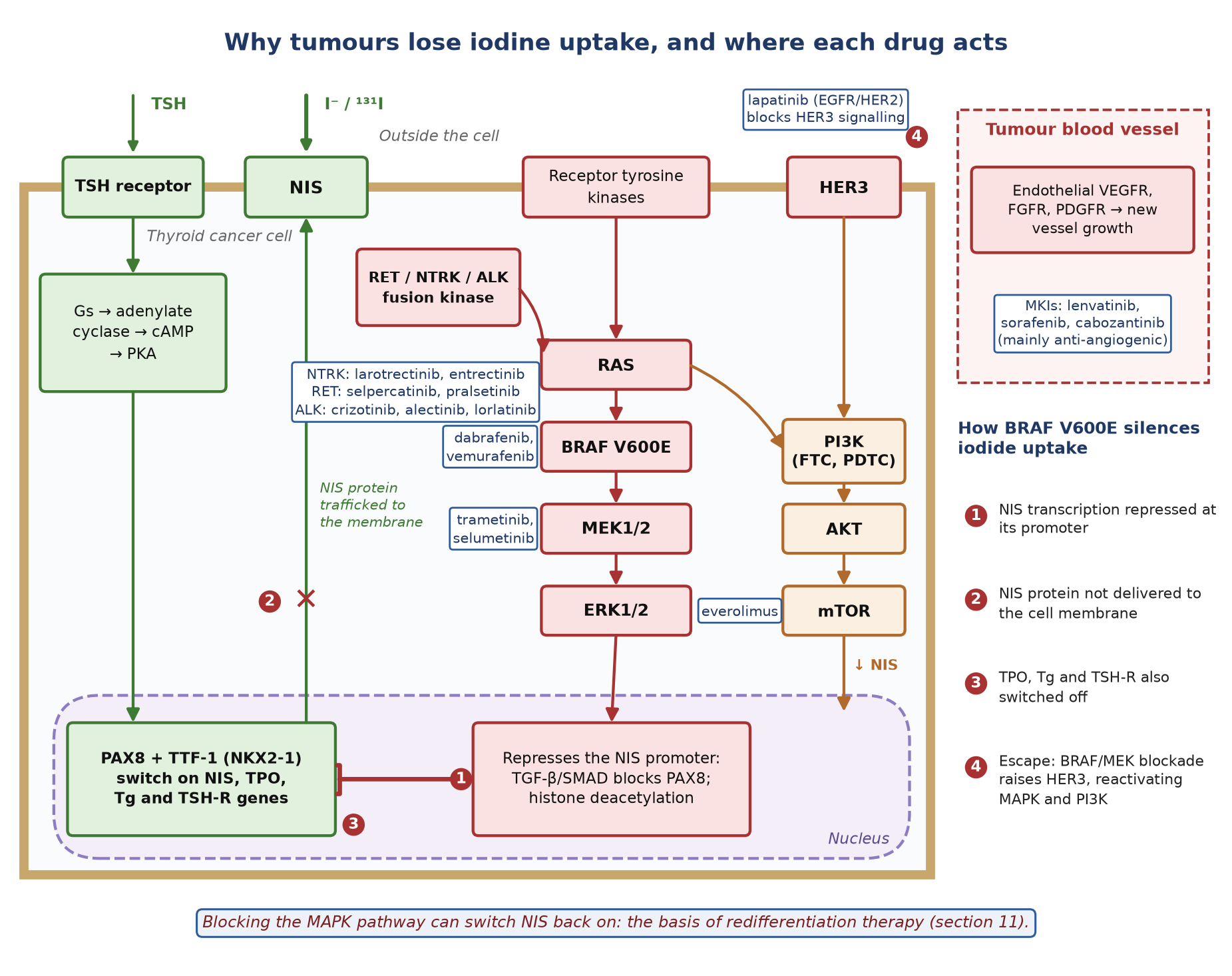
- Iodine trapping needs NIS, which is driven by TSH-receptor signalling and the thyroid transcription factors.
- Loss of differentiation is tightly linked to constitutive MAPK signalling (RAS → BRAF → MEK → ERK).
- BRAF V600E, present in about half of papillary cancers, represses NIS and other thyroid-specific genes (TSH-R, Tg, TPO).
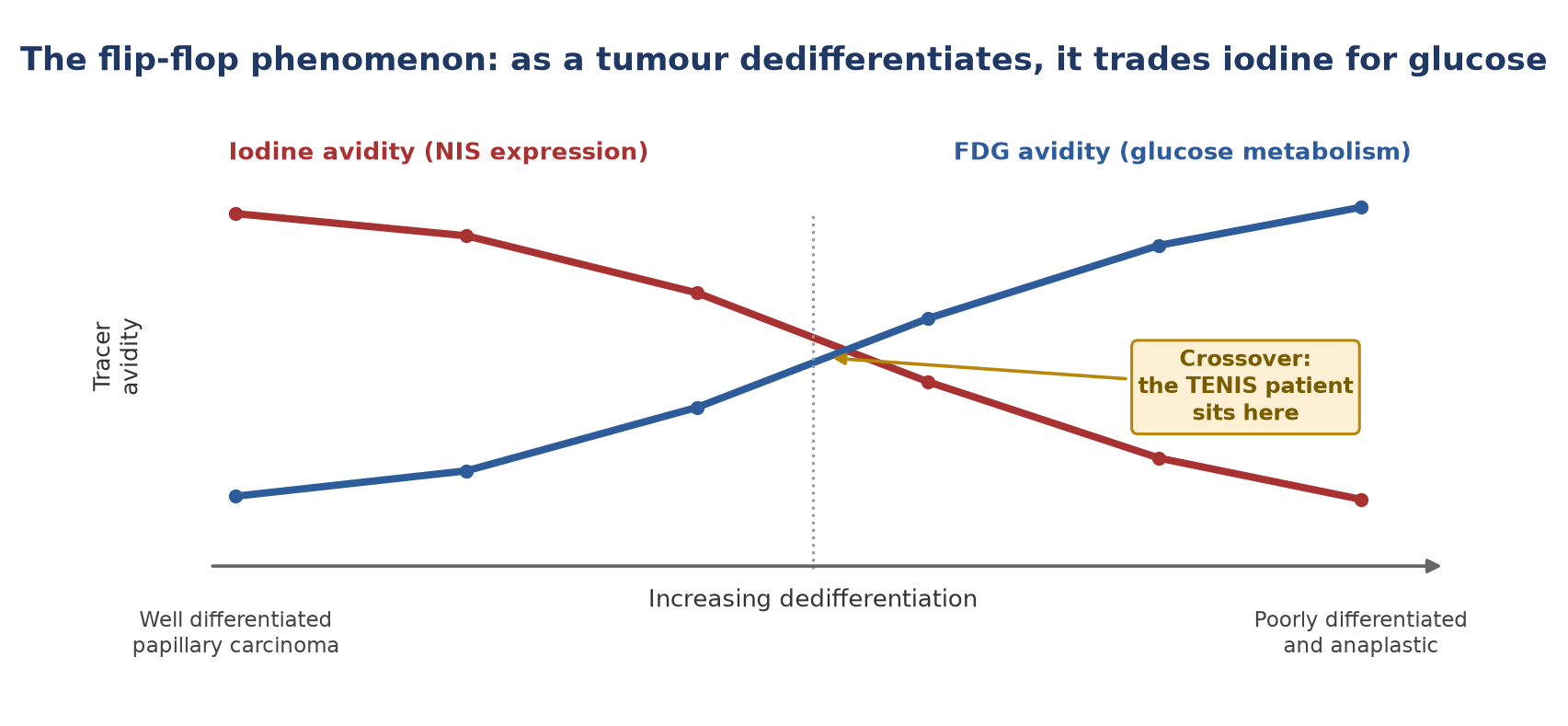
- As iodine avidity falls, glucose metabolism usually rises. That is why RAIR lesions are often FDG-avid (the “flip-flop” pattern).
- The practical corollary: switching MAPK signalling off can switch NIS back on (redifferentiation, section 11).
3. Imaging in RAIR DTC
| Modality | What it does in RAIR DTC |
|---|---|
| Post-therapy ¹³¹I scan with SPECT/CT | The scan that defines RAIR; shows which lesions still trap iodine |
| ¹⁸F-FDG PET/CT | Finds iodine-negative disease; FDG avidity weighs against further RAI and signals more aggressive disease; tracks progression and response |
| CT / MRI | Measures target lesions (RECIST) and follows disease not seen on iodine scans |
| Neck ultrasound | Long-term surveillance of small cervical nodal metastases |
- An FDG-avid, iodine-negative lesion in a patient with rising Tg is the flip-flop signature. Report it as such: it changes the next step from “more iodine” to surveillance, local or systemic therapy.
4. Management at a glance
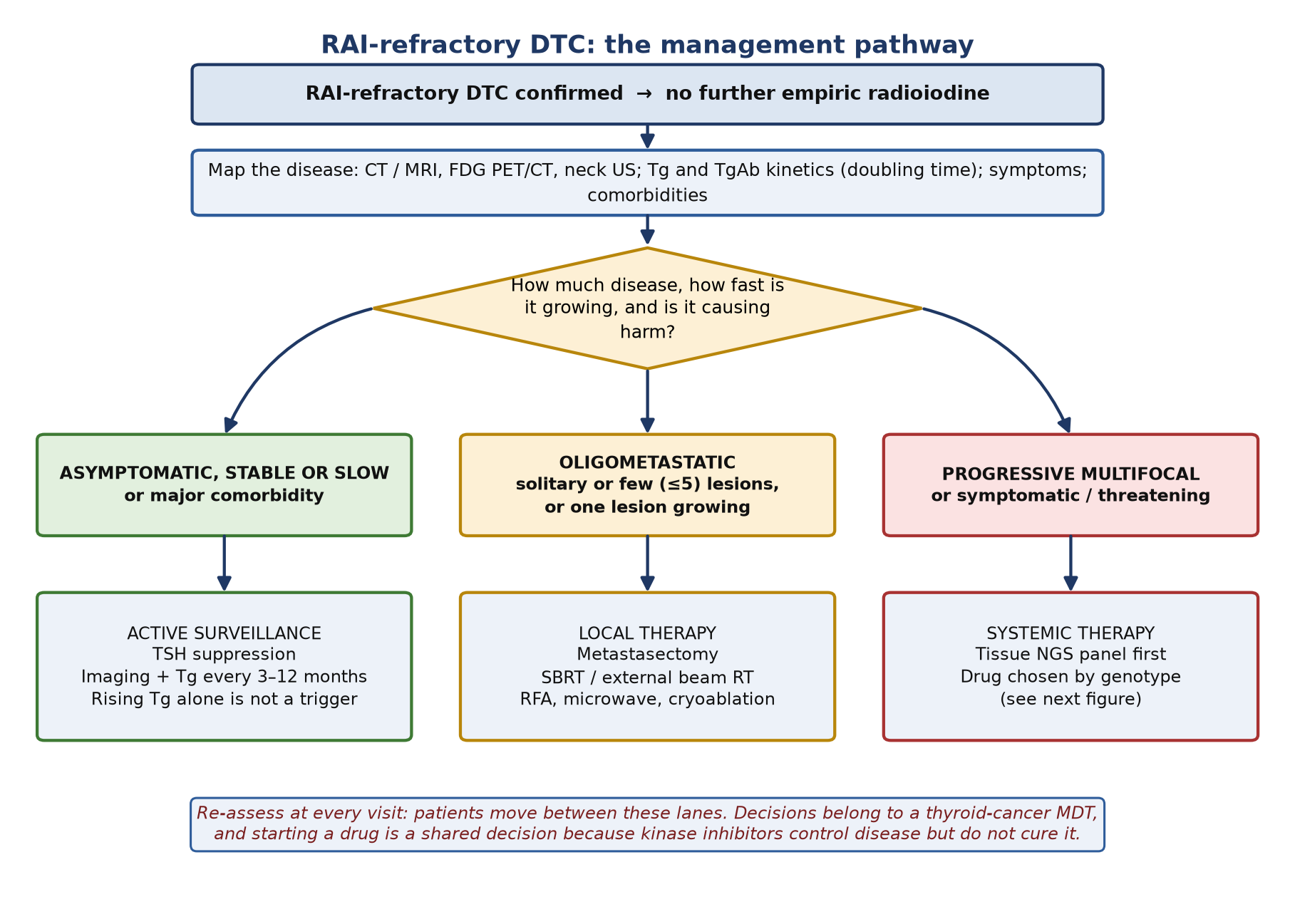
Three questions drive every decision: how much disease, how fast is it growing, and is it causing (or about to cause) harm?
5. Active surveillance
- Who: asymptomatic, stable or minimally progressive disease, or clinically significant comorbidities.
- How: TSH-suppressive levothyroxine with serial imaging and thyroglobulin (with antibodies).
- How often: every 3–12 months, set by disease burden, lesion location, histology and Tg doubling time.
- A rising Tg alone, without structural progression, is not a reason to start systemic therapy.
- An accelerating Tg should bring imaging forward to look for a structural correlate.
6. Before systemic therapy: test the tumour
- Perform tissue-based biomarker testing before the first systemic drug to find actionable drivers.
- A multigene NGS panel that also detects fusions is preferred over sequential single-gene tests.
- PD-L1 immunohistochemistry is not a routine biomarker in RAIR DTC.
| Histology (advanced disease) | Treatment-directing alteration found |
|---|---|
| Papillary (PTC) | 85% (260/307) |
| Anaplastic (ATC) | 52% (68/130) |
| Poorly differentiated (PDTC) | 29% (16/55) |
| Follicular (FTC) | 2% (1/55) |
Table 1. Yield of genomic profiling in 552 advanced thyroid carcinomas (Toda et al., Japanese national database).
7. Multikinase inhibitors: no actionable driver
| Drug | Main targets | Pivotal trial | Median PFS vs placebo | Place |
|---|---|---|---|---|
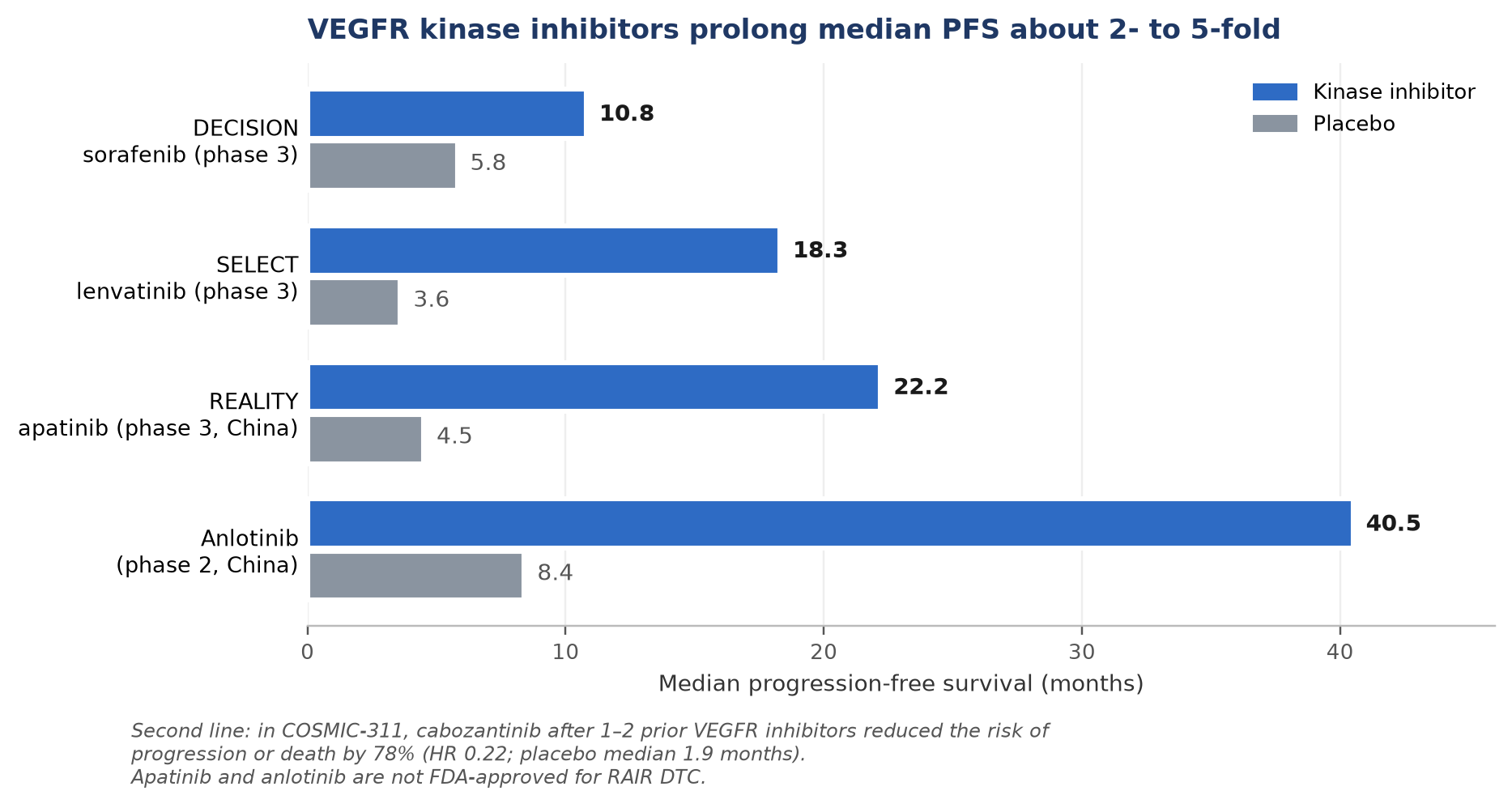
| Lenvatinib | VEGFR1–3, FGFR1–4, PDGFRα, RET, KIT | SELECT, phase 3 (n = 392) | 18.3 vs 3.6 months; ORR 64.8% | Preferred 1st line |
| Sorafenib | VEGFR1–3, PDGFRβ, RET, RAF (incl. BRAF) | DECISION, phase 3 (n = 417) | 10.8 vs 5.8 months | 1st-line alternative |
| Cabozantinib | VEGFR2, MET, RET, AXL | COSMIC-311, phase 3 (n = 187), after 1–2 prior VEGFR TKIs | Not reached vs 1.9 months (HR 0.22) | 2nd line |
- Lenvatinib over sorafenib: there is no head-to-head trial, but network meta-analyses and real-world comparisons favour lenvatinib for PFS and response rate.
- In DECISION, sorafenib improved PFS in every biomarker subgroup, irrespective of BRAF or RAS status.
- Cabozantinib is FDA-approved for RAIR DTC that has progressed on prior VEGFR-targeted therapy.
When to start an MKI (lenvatinib preferred; sorafenib alternative)
- Symptomatic RAIR DTC: start lenvatinib without delay.
- Asymptomatic but now progressing: start lenvatinib earlier if disease control is the priority; deferring is reasonable if quality of life is the priority.
- MKIs (lenvatinib, sorafenib, cabozantinib) are not curative and their toxicity affects daily life.
- Overall survival is hard to judge because placebo patients crossed over in DECISION (sorafenib) and SELECT (lenvatinib). Exploratory SELECT analyses suggest a lenvatinib OS benefit in patients over 65 and in those with lung metastases ≥1 cm.
MKI dosing and monitoring
- Lenvatinib: start at 24 mg once daily. In a randomised trial, starting at 18 mg gave a lower week-24 response rate (40.3% vs 57.3%, noninferiority not met) with similar grade ≥3 toxicity (57.1% vs 61.3%).
- Lenvatinib: 14 mg once daily for severe renal impairment (creatinine clearance <30 mL/min) or severe hepatic impairment.
- Sorafenib: 400 mg twice daily (the DECISION dose).
- Cabozantinib: 60 mg once daily (the COSMIC-311 dose).
- Monitoring (any MKI): review at baseline, at least every 2 weeks for the first 2 months, then every 1–2 months.
Other VEGFR inhibitors (not FDA-approved for RAIR DTC)
- Sunitinib, pazopanib, axitinib and vandetanib: phase 2 activity only.
- Apatinib (REALITY, phase 3, China): median PFS 22.2 vs 4.5 months, with an overall survival benefit.
- Anlotinib (randomised phase 2, n = 113, China): median PFS 40.5 vs 8.4 months.
8. Living with an MKI: toxicity
| Adverse effect | Prevent / check | Manage |
|---|---|---|
| Hypertension (commonest VEGFR class effect) | Control BP before starting; daily home BP | Antihypertensives; dose interruption or reduction if refractory |
| Hand–foot skin reaction (sorafenib > lenvatinib) | Remove calluses before and during therapy; alcohol-free moisturisers; cushioned footwear; avoid sun exposure | 20–40% urea cream; topical or systemic steroids if severe; dose change |
| Diarrhoea (with anorexia, weight loss, stomatitis) | Avoid trigger foods; high-protein, low-fat, low-fibre diet | Loperamide; probiotics; hydration |
| Rising TSH | TSH and free T4 periodically | Increase levothyroxine to hold the TSH target |
| Proteinuria | Urine protein monitoring | Interrupt or reduce the dose if significant |
| QTc prolongation (class effect) | ECG before starting and periodically; correct K⁺ and Mg²⁺ | Avoid other QT-prolonging drugs; interrupt if prolonged |
- Serious events: GI perforation, fistula, bleeding, arterial and venous thromboembolism, hepatic or renal toxicity, reversible posterior leukoencephalopathy.
- Avoid or use with great caution in: poor cardiac function, recent acute coronary syndrome or stroke, uncontrolled hypertension, colitis or diverticulitis, recent bowel surgery or perforation, tumour invading the trachea, oesophagus or great vessels, haemoptysis, untreated brain metastases.
9. Targeted therapy for actionable drivers
| Driver | How common | First choice | Key evidence |
|---|---|---|---|
| NTRK fusion | ~2% of adult PTC; far more common in children (up to ~25%) | Larotrectinib (entrectinib alternative) | Larotrectinib, thyroid cohort (n = 29): ORR 71%; 86% in PTC/FTC; 24-month PFS 69%; mostly grade 1–2 toxicity |
| RET fusion | A minority of PTC; commoner in children and after radiation exposure | Selpercatinib or pralsetinib | Selpercatinib (LIBRETTO-001, n = 19): ORR 79%, 1-year PFS 64%. Pralsetinib (ARROW, n = 9): ORR 89%. No head-to-head trial |
| ALK fusion | Rare; commoner after radiation exposure | Crizotinib, alectinib or lorlatinib | Case reports and small series only, but responses can be striking |
| BRAF V600E | About half of PTC | Lenvatinib first; BRAF-directed therapy after MKI progression or intolerance | Vemurafenib: ORR 38.5% (MKI-naive). Dabrafenib vs dabrafenib + trametinib: RECIST ORR 35% vs 30%; the combination was not superior |
- Dabrafenib + trametinib holds a tumour-agnostic FDA approval for BRAF V600E solid tumours that have progressed after prior treatment.
- BRAF-directed drugs are not for non-V600 BRAF alterations.
- RAS (common in FTC, follicular-variant PTC and PDTC): no approved targeted drug. KRAS G12C inhibitors (sotorasib, adagrasib) could be considered if that exact mutation is found. HRAS (tipifarnib) and MEK (selumetinib) inhibition have shown little activity.
- PI3K/AKT/mTOR: buparlisib gave no RECIST responses; single-agent everolimus 0–5%. Combinations remain investigational.
- Other genotypes: lenvatinib first line.
10. Oligometastatic disease: treat locally
For a solitary metastasis or a few (oligometastatic) lesions, focal ablative treatment can control the sites, delay the need for systemic therapy, may prolong survival and, rarely, cures.
| Option | Best suited to | Notes |
|---|---|---|
| Metastasectomy | Resectable lung or bone lesions | No randomised trials; complete (R0) resection is associated with excellent long-term survival |
| SBRT / SABR | Lesions unsuitable for surgery (lung, bone, spine) | SABR-COMET (mixed primaries, randomised phase 2) improved overall survival versus standard care |
| Radiofrequency ablation | Small lesions (≤3 cm) away from large vessels | Less effective above 3 cm or next to large vessels (heat sink) |
| Microwave ablation | Larger lesions (>3 cm) | Heats faster and hotter than RFA |
| Cryoablation | Lesions near nerves or other sensitive structures | Freezing; ice ball visible on CT |
- One or a few lesions grow while the rest stay controlled on a drug: treat the growing sites locally (surgery or SBRT) and continue the current systemic therapy, which can extend its useful life considerably.
11. Redifferentiation therapy
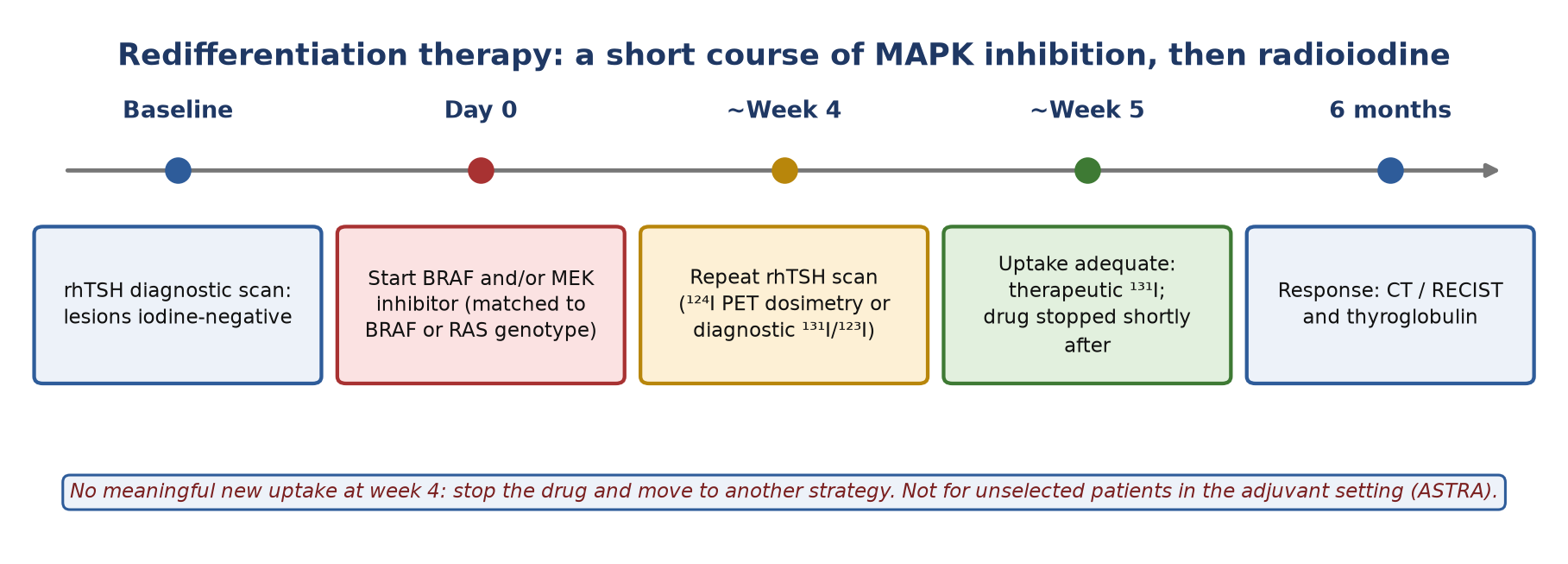
The aim is to use a short course of a MAPK-pathway inhibitor to switch NIS back on, then treat with ¹³¹I.
| Study | Drug | Patients | Result |
|---|---|---|---|
| Ho 2013 | Selumetinib (MEK), 4 weeks | 20 evaluable | Uptake increased in 12; 8 reached the dosimetry threshold (all 5 NRAS-mutant). After ¹³¹I: 5 PR, 3 SD |
| Rothenberg 2015 | Dabrafenib (BRAF V600E) | 10 | New uptake in 6; after ¹³¹I: 2 PR, 4 SD at 3 months |
| Dunn 2019 | Vemurafenib (BRAF) | 10 evaluable | 4 reached the threshold and were treated; all showed tumour regression at 6 months |
| MERAIODE, 2023 | Dabrafenib + trametinib (BRAF V600E) | 24 (21 evaluable) | Scan uptake 5% at baseline, 65% on drug; 6-month PR 38%, SD 52% |
| ASTRA, 2022 | Selumetinib + adjuvant RAI (high risk, not genotyped) | 233 | Complete response at 18 months 40% vs 38%: negative |
- May be considered in selected patients with progressive, metastatic RAIR DTC and a targetable BRAF or RAS mutation.
- Not recommended in the adjuvant setting for patients not selected by genotype (ASTRA).
Why it sometimes fails
- MAPK rebound: BRAF or MEK inhibition up-regulates HER3, which reactivates MAPK and PI3K signalling.
- Adding lapatinib, an EGFR/HER2 inhibitor that blocks HER3 activation, prevents this rebound and increases NIS expression more than BRAF/MEK inhibition alone in preclinical models.
12. Beyond first line: immunotherapy and chemotherapy
Immune checkpoint inhibitors
- Single-agent pembrolizumab is disappointing in unselected RAIR DTC: ORR 9% in KEYNOTE-028 (n = 22) and 6.8% in KEYNOTE-158 (n = 103).
- Consider only for TMB-high or MSI-high / mismatch-repair-deficient tumours, where pembrolizumab has tumour-agnostic approvals.
- Lenvatinib + pembrolizumab: no clear advantage over lenvatinib alone in the first line; activity is modest when pembrolizumab is added at lenvatinib progression.
Cytotoxic chemotherapy
- Low efficacy; not a standard treatment.
- Reserved for rapidly progressive, imminently threatening disease (e.g. airway compromise) that cannot be controlled by other means.
13. On the horizon: new radioligand therapy
- SSTR-targeted PRRT: thyroid cancers can over-express somatostatin receptors (SSTR2). In a meta-analysis (11 studies, 165 patients), ORR was 15.6% in DTC and 8.5% in MTC, with serious adverse events in about 3%; ¹⁷⁷Lu-based PRRT performed better than ⁹⁰Y-based PRRT. Select patients with SSTR PET.
- FAP-targeted therapy: in a first-in-human dose-escalation study of ¹⁷⁷Lu-EB-FAPI (¹⁷⁷Lu-LNC1004) in 12 patients with metastatic RAIR thyroid cancer, ORR was 25% and disease control 83%; haematological toxicity limited the highest dose.
- Both remain investigational: consider them in trials or after standard options are exhausted.
Summary
- Confirm RAIR on a post-therapy scan or by progression within 6 months of a therapeutic activity, then stop empiric RAI.
- Map the disease with FDG PET/CT and cross-sectional imaging; use Tg kinetics to time imaging, not to start drugs.
- Asymptomatic, slow disease: TSH suppression with imaging and Tg every 3–12 months.
- Few lesions, or one lesion growing: surgery, SBRT or thermal ablation.
- Progressive disease: NGS panel, then genotype-matched therapy (lenvatinib, then cabozantinib, if no driver).
- Redifferentiation, PRRT and FAP-targeted therapy are promising but not yet standard.
Test yourself
Five quick questions. Pick an answer to see the explanation.
References
- Ringel MD, Sosa JA, Baloch Z, et al. 2025 American Thyroid Association management guidelines for adult patients with differentiated thyroid cancer. Thyroid. 2025;35(8):841-985.
- Filetti S, Durante C, Hartl DM, et al. ESMO Clinical Practice Guideline update on the use of systemic therapy in advanced thyroid cancer. Ann Oncol. 2022;33(7):674-84.
- Brose MS, Nutting CM, Jarzab B, et al. Sorafenib in radioactive iodine-refractory, locally advanced or metastatic differentiated thyroid cancer: a randomised, double-blind, phase 3 trial. Lancet. 2014;384(9940):319-28.
- Schlumberger M, Tahara M, Wirth LJ, et al. Lenvatinib versus placebo in radioiodine-refractory thyroid cancer. N Engl J Med. 2015;372(7):621-30.
- Tahara M, Kiyota N, Hoff AO, et al. Impact of lung metastases on overall survival in the phase 3 SELECT study of lenvatinib in patients with radioiodine-refractory differentiated thyroid cancer. Eur J Cancer. 2021;147:51-7.
- Brose MS, Panaseykin Y, Konda B, et al. A randomized study of lenvatinib 18 mg vs 24 mg in patients with radioiodine-refractory differentiated thyroid cancer. J Clin Endocrinol Metab. 2022;107(3):776-87.
- Brose MS, Robinson B, Sherman SI, et al. Cabozantinib for radioiodine-refractory differentiated thyroid cancer (COSMIC-311): a randomised, double-blind, placebo-controlled, phase 3 trial. Lancet Oncol. 2021;22(8):1126-38.
- Lin Y, Qin S, Li Z, et al. Apatinib vs placebo in patients with locally advanced or metastatic, radioactive iodine-refractory differentiated thyroid cancer: the REALITY randomized clinical trial. JAMA Oncol. 2022;8(2):242-50.
- Chi Y, Zheng X, Zhang Y, et al. Anlotinib in locally advanced or metastatic radioiodine-refractory differentiated thyroid carcinoma: a randomized, double-blind, multicenter phase II trial. Clin Cancer Res. 2023;29(20):4047-56.
- Toda S, Hiroshima Y, Iwasaki H, et al. Genomic landscape and clinical features of advanced thyroid carcinoma: a national database study in Japan. J Clin Endocrinol Metab. 2024;109(11):2784-92.
- Waguespack SG, Drilon A, Lin JJ, et al. Efficacy and safety of larotrectinib in patients with TRK fusion-positive thyroid carcinoma. Eur J Endocrinol. 2022;186(6):631-43.
- Wirth LJ, Sherman E, Robinson B, et al. Efficacy of selpercatinib in RET-altered thyroid cancers. N Engl J Med. 2020;383(9):825-35.
- Subbiah V, Hu MI, Wirth LJ, et al. Pralsetinib for patients with advanced or metastatic RET-altered thyroid cancer (ARROW): a multi-cohort, open-label, registrational, phase 1/2 study. Lancet Diabetes Endocrinol. 2021;9(8):491-501.
- Brose MS, Cabanillas ME, Cohen EE, et al. Vemurafenib in patients with BRAF(V600E)-positive metastatic or unresectable papillary thyroid cancer refractory to radioactive iodine: a non-randomised, multicentre, open-label, phase 2 trial. Lancet Oncol. 2016;17(9):1272-82.
- Busaidy NL, Konda B, Wei L, et al. Dabrafenib versus dabrafenib + trametinib in BRAF-mutated radioactive iodine refractory differentiated thyroid cancer: results of a randomized, phase 2, open-label multicenter trial. Thyroid. 2022;32(10):1184-92.
- Ho AL, Grewal RK, Leboeuf R, et al. Selumetinib-enhanced radioiodine uptake in advanced thyroid cancer. N Engl J Med. 2013;368(7):623-32.
- Rothenberg SM, McFadden DG, Palmer EL, et al. Redifferentiation of iodine-refractory BRAF V600E-mutant metastatic papillary thyroid cancer with dabrafenib. Clin Cancer Res. 2015;21(5):1028-35.
- Dunn LA, Sherman EJ, Baxi SS, et al. Vemurafenib redifferentiation of BRAF mutant, RAI-refractory thyroid cancers. J Clin Endocrinol Metab. 2019;104(5):1417-28.
- Leboulleux S, Do Cao C, Zerdoud S, et al. A phase II redifferentiation trial with dabrafenib-trametinib and 131I in metastatic radioactive iodine refractory BRAF p.V600E-mutated differentiated thyroid cancer. Clin Cancer Res. 2023;29(13):2401-9.
- Ho AL, Dedecjus M, Wirth LJ, et al. Selumetinib plus adjuvant radioactive iodine in patients with high-risk differentiated thyroid cancer: a phase III, randomized, placebo-controlled trial (ASTRA). J Clin Oncol. 2022;40(17):1870-8.
- Mehnert JM, Varga A, Brose MS, et al. Safety and antitumor activity of the anti-PD-1 antibody pembrolizumab in patients with advanced, PD-L1-positive papillary or follicular thyroid cancer. BMC Cancer. 2019;19(1):196.
- Oh DY, Algazi A, Capdevila J, et al. Efficacy and safety of pembrolizumab monotherapy in patients with advanced thyroid cancer in the phase 2 KEYNOTE-158 study. Cancer. 2023;129(8):1195-204.
- Lee DY, Kim YI. Peptide receptor radionuclide therapy in patients with differentiated thyroid cancer: a meta-analysis. Clin Nucl Med. 2020;45(8):604-10.
- Fu H, Huang J, Zhao T, et al. Fibroblast activation protein-targeted radioligand therapy with 177Lu-EB-FAPI for metastatic radioiodine-refractory thyroid cancer: first-in-human, dose-escalation study. Clin Cancer Res. 2023;29(23):4740-50.
- Chest uptake after thyroid remnant ablation · Intermediate
Spotted an error or something out of date? Report an error